Archive | Cooked at Home RSS feed for this section

Southern Comfort: Crawfish Étouffée (with a recipe for crawfish stock)

[fblike][twitter]

Warning: if this post feels a bit disjointed, it’s because I started writing it almost a month ago. The leftovers are long gone, but the thoughts, and the sense of comfort, remain.

I’ve often joked that I’m going to write a book titled How to Burn Out by 30. I have at least three chapters already outlined in my head–the result of my insistence on learning things the hard way, I suppose.

While the number really doesn’t hold significance, I hit the big three zero earlier this year, amidst feelings of burnout and an urgency for change. Friends have called this my third-life crisis; I’m considering it more of a third-life catalyst, though the former is a much more accurate description most days.

I’ve found this to be an intensely reflective period–I’ve looked more and more to the past to understand the present, and in doing so, I’ve reached for long-lost comforts, the most tangible of which are foods from my childhood.

So imagine my excitement when Saveur published The Essential Louisiana several weeks back. After clicking through to the crawfish étouffée recipe, I knew I had to make it. Étouffée is a rich, roux-based Cajun  dish served over rice–it’s far from healthy, but it’s incredibly flavorful. And it’s comfort food.
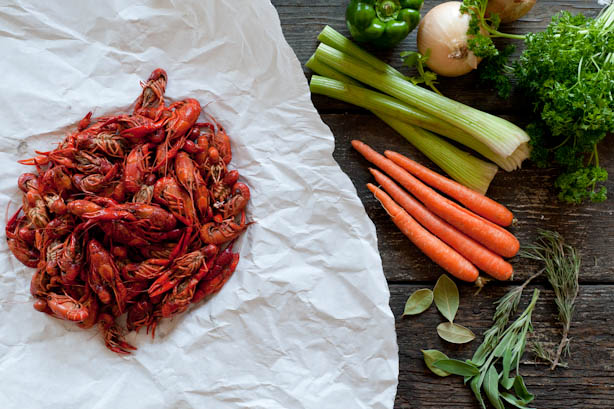
Crawfish are seasonal, and they’re available in California, but I have yet to find a reliable source. The local fish market orders them this time of year, but from Louisiana–the three pounds I picked up were shipped in live and boiled with a light seasoning. I’ll gladly take what I can get.

Here’s where I need to make a confession: prior to making this, I’d never successfully made a roux. I mean, I’ve burned my fair share, but a good roux takes a lot of time and attention. A dark roux takes stamina and a bit of insanity.

Saveur’s recipe calls for a “dark chocolate” roux, which took a couple tries, but it’s reminiscent of the style of étouffée I grew to love as a kid, so it was worth it. The recipe really needs no improvements; instead of posting a tweaked version, here’s the stock I made from the crawfish shells.

Crawfish Stock

  • 3 pounds of seasoned, boiled crawfish, shelled (save the tails and claw meat for the étouffée!)
  • 2 large white onions, cut in half, then quartered
  • 4-5 stalks celery
  • 6 carrots
  • 1 Tbsp. vegetable oil
  • 3 bay leaves
  • 2 cloves garlic
  • Salt, to taste

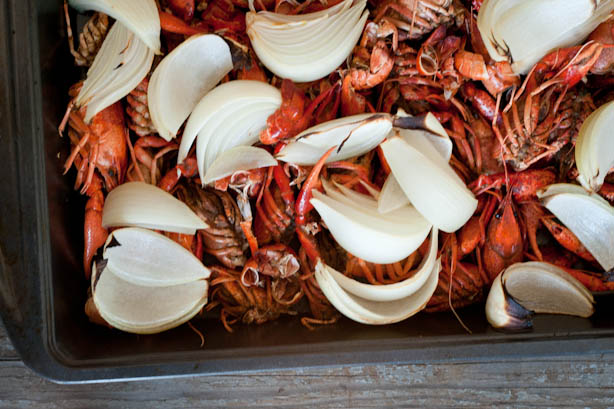
Preheat the oven to 400°F. Spread the crawfish shells evenly across two 9″x13″ baking pans; place the onions on top. Toss the carrots and celery in the vegetable oil and spread out in a third baking dish. Roast everything for an hour, then remove the veggies, turn the oven to 450°F and continue toasting the shells for another 20-30 minutes.
Place the shells, veggies, garlic and bay leaves in a large stock pot and cover with plenty of water. Bring to a boil, then cover and reduce to a simmer for an hour and a half.

The seasoning from the crawfish will flavor the water and may add quite a bit of spice, which is just how this Southern boy likes it. The stock will still need salt–mine needed about three tablespoons.

Strain the stock with a cheesecloth, doubled over (so the shells don’t cut through). Save the excess in the fridge for a few days, or freeze for later use; think, shrimp and grits.

I’d post a photo of the final product, but it looks like mirky water. Instead, here’s the étouffée:

Leave a Comment

Mushroom & Pea Risotto with Homemade Crab Stock

[fblike][twitter]

Sunday afternoon I found myself staring over the shoulder of two friends, anxiously awaiting a taste of the meat they were ripping from the shell of a Dungeness crab.

“You’re not throwing those shells out, are you?”

I asked as though I would have done otherwise. Then, this slipped out of my mouth: “Those would make a great stock.”

I probably heard that on The Food Network.

Truth be told, I’ve never made a real stock–let alone one of seafood. Laura called my bluff: “What would you do with the stock?” She then scooped out the “crab butter” and set it aside, excited to hear what I would do with it.

“Not sure. A risotto, maybe?” It sure as hell sounded like I knew what I was talking about. But like the stock, I had no experience with risotto; it’s a dish I’ve been taught to fear.

I thought about the flavors, consulted a few friends, and decided on making a mushroom and pea risotto. Here’s the result:

It’s good. It’s really good, actually–rich, creamy, with a unique depth from the stock. It’s a delicate comfort food.

I’d post the recipe, but I didn’t create it. Instead, I turned to trusted sources, and adapted as needed:

For the stock, I followed Hank Shaw’s recipe. I only had the body from one crab (the recipe calls for four or five Dungeness), so I mixed in the tomalley before the adding the shells to the pot. I appreciate’s Hank’s instruction on simmering–I would have boiled the shit out of the broth to concentrate the flavors, but he explains that doesn’t work, and it creates a cloudy stock.

With the crab at a simmer, I started on Elise Bauer’s recipe for mushroom risotto. I used a mix of shitake, chanterelle, and black trumpet mushrooms–that’s what looked best at the market. (I also used this mix in the stock.) I switched chicken stock for the crab, and used a sauvignon blanc leftover from the stock. If I could do it over, that’s the one ingredient I’d change; the bottle I had was a little too bright and citrusy for this recipe.

I also added about half a cup of fresh peas to the risotto. I wanted them crispy, so I tossed them in at the end, with the Parmesan.

That’s it. A little simmering, a lot of stirring, and a desire to test myself. There’s room for improvement, but I’d proudly share a bowl. If I had any left.

Leave a Comment

Redefining Tradition

[fblike][twitter]

I’m not big on tradition–at least, not in the form that it seems to take during the holidays. Thanksgiving, for example, long ago highlighted the rich flavors of harvest, but the “traditional” celebration seems to have devolved into canned sweet potatoes, green beans topped with crispy onions, and a cranberry-colored gelatinous substance. Sure, my family serves a version of these dishes; my grandfather also smokes venison and my aunt makes a bourbon pecan pie that I would fight you for–if there’s a turkey, it’s usually wild.

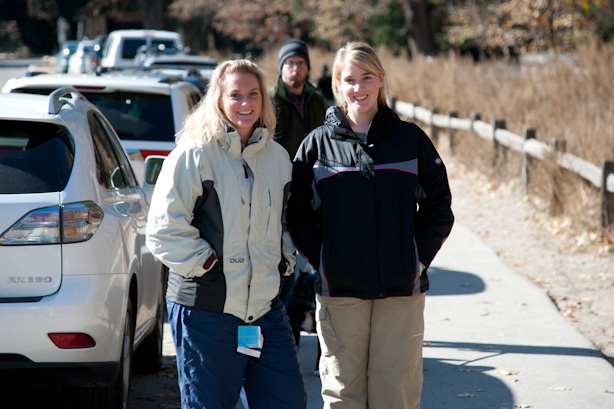
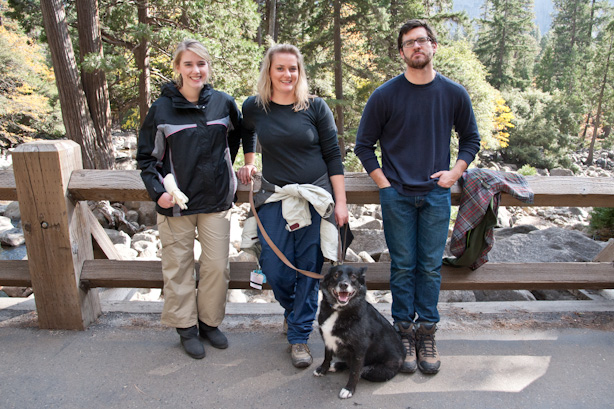
This year, Kim and I didn’t travel: we packed a picnic, and headed to Yosemite for the Thanksgiving day with my brother and Kim’s sister. That’s Kim on the left, Ashley on the right, and Jason photo-bombing in the background:

More of the family:


And Darla Abercrombie dog:

We live less than an hour from the entrance to the park, but in my seven years here I’ve been once (actually, I think that was before I moved here!). I’ve forgotten how incredible our national parks are.


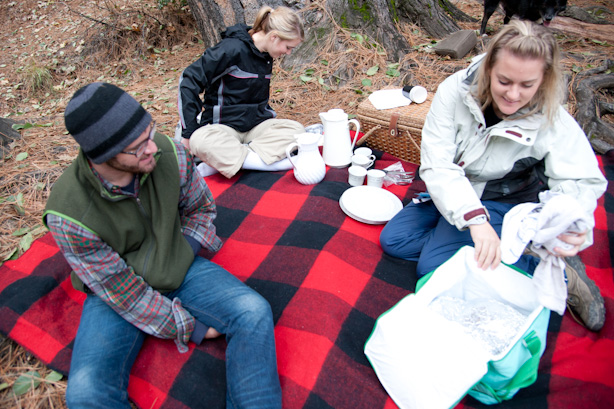
We spent the morning walking around the lower falls (and the village). We gave up on waiting for sun to come out and settled on a spot on the bank of the Merced for our picnic.


Lunch:

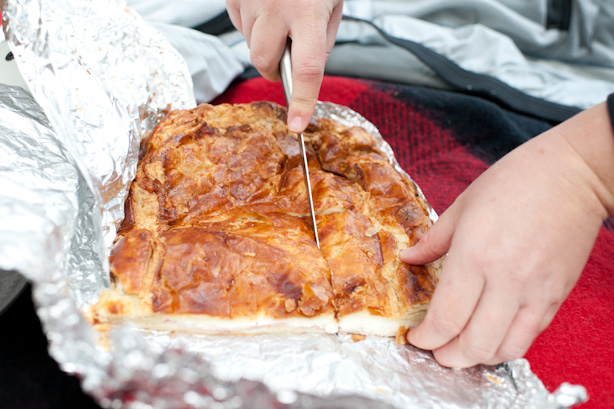
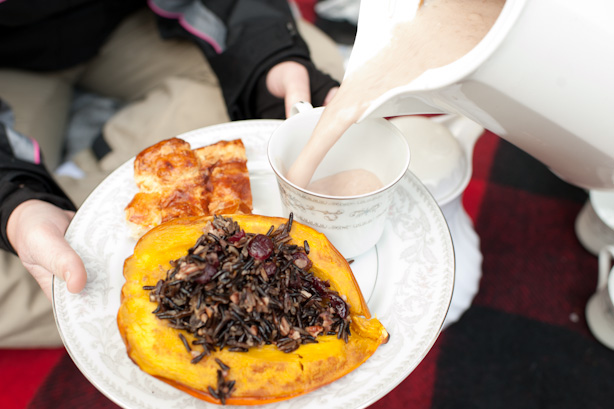
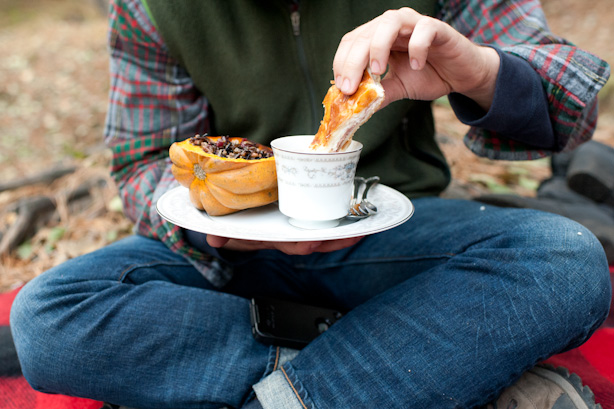
Kim and Ashley cooked everything. From the top: ham and Gruyere bake, roasted acorn squash with wild rice and cranberries, and cauliflower soup. I want to marry that soup.

Overall, it was an incredible day, rooted in spending quality time with loved ones, and in savoring the flavors of the season. That’s our new tradition.

Leave a Comment

Dinner with The Cured Ham & Friends

[fblike][twitter]

I teased Saturday’s dinner on TasteFresno, but the two photos I posted didn’t do the full spread justice. David (of The Cured Ham), Chef Tommy, and Falina put on an incredible feast–one of the tastiest meals I’ve had, actually.

For more photos and the full menu (including a description of the “Prime Tasting of Three Ranches”) check out The Ham’s recap.


For dessert: bread pudding with praline sauce. *drool*

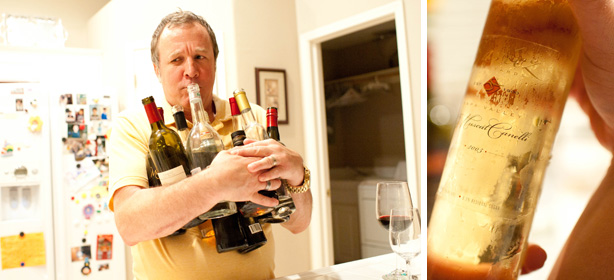
Did I mention there was wine? Brut, brut rose, Sangiovese, cabernet sauvignon, muscat canelli and port, to be specific. Also, Averna (that’s what Kim’s clutching below), grappa and rum.


Special thanks to Falina and John for hosting. Looking forward to many more gatherings!

Leave a Comment

Chilorio and chicken feed

[fblike][twitter]

I’m not a picky eater, but there are two things that I usually try to avoid: canned meat and mayonnaise. Don’t even think about trying to mix those two around me.

I take exception on occasion, like business luncheons or situations where refusal may offend someone. Also, when it looks so tasty that I can’t resist:

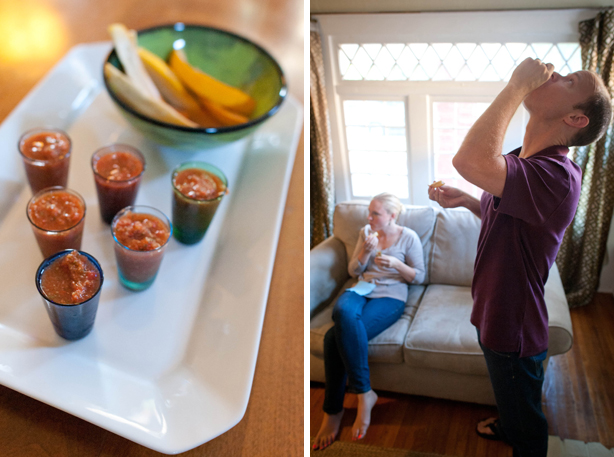
That there is a fried egg hugging a tortilla full of chilorio, a slow-simmered, spiced pork that’s sold canned or in pouches here in the States.  The taco was our entree for dinner last week when Kim and I joined Tracy, Nyeland and Katie for dinner.

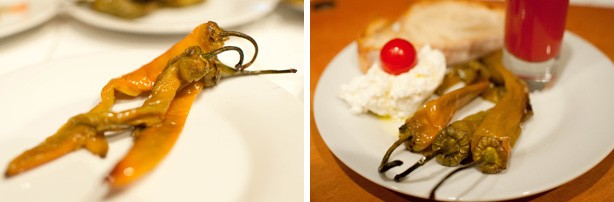
But first, gazpacho shooters with pickled zucchini chasers:

A little wine, a cool summer evening…

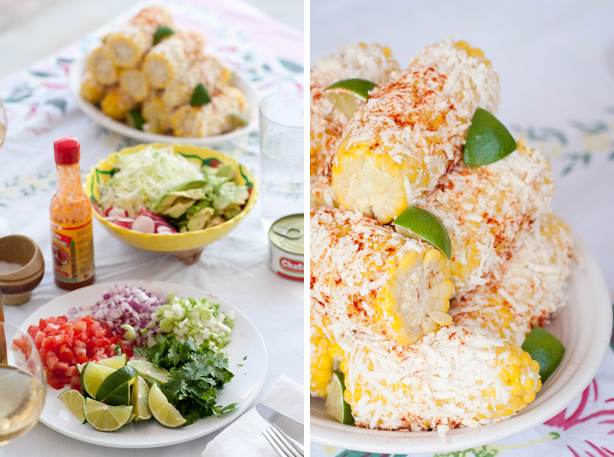
…and a table full of tasty eats.

Yep, that’s mayo on that corn. I’ll admit, it worked.

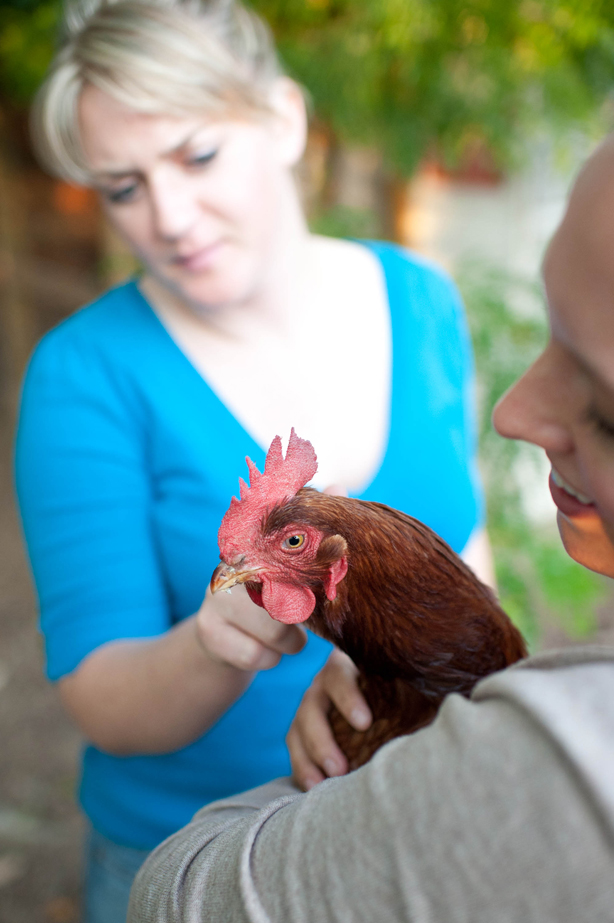
Now, about those eggs—those were courtesy of these lovely ladies. Who knew that chickens were such fans of corn on the cob?

Leave a Comment

I heart (German chocolate) cakes-turned-cookies

[fblike][twitter]

Kim: “I feel like baking. I have an itch.”

Me: “You should make cookies out of German chocolate cake.”

Kim: “Okay.”

This, my friends, is love.

Recipe courtesy of Mag-Pie’s and More

Leave a Comment

Grilled Fava Crostini

[fblike][twitter]

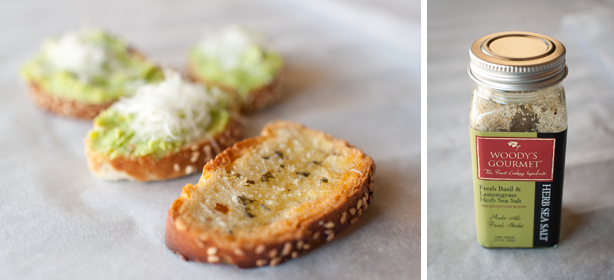
Last week I received a jar of herb sea salt from Woody’s Gourmet, as a preview of what’s coming in this month’s Tasting Box from Foodzie, and a challenge to use the ingredient in a recipe worth sharing.

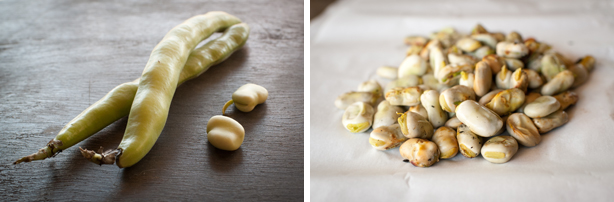
After smelling and tasting the salt, my first inclination was to simply sprinkle it over fresh tomatoes, which I’m starting to see at the farmers market. The flavors from the herbs were incredible with the raw tomato! But that’s not much of a recipe, so started to experiment with fava beans (also found at the farmers market).

At last month’s Eat Retreat, I learned how to make a fava crostini from fellow-retreater Lauren Ladoceour. This is my take:

Ingredients

  • 3 pounds fava beans, in the pod
  • 3-4 Tbsps. virgin olive oil, plus 1 Tbsp. for the bread
  • 1 Tbsp. water, plus more as needed for desired texture
  • 3-4 leaves fresh mint
  • 1 lemon
  • 1/2 tsp. fresh ground black pepper, or to taste
  • 1 tsp. Woody’s Gourmet Fresh Basil & Lemongrass Herb Sea Salt
  • 2 oz. parmigiano reggiano
  • 1 loaf seed bread or thin baguette, sliced thin and toasted

Instructions

Fire up the grill (I like mine about 400°F). Line up the fava pods—if you can’t fit all of them at once, grill them in stages. Close the lid on the grill and cook for 4-5 minutes; flip, then cook for another 4-5 minutes. A little char is good for flavor, but if you leave them on too long, the beans will start to dry out and will be difficult to shell.

Remove the cooked pods from the grill, and let cool (this only takes a few minutes). Zest the lemon; squeeze and reserve 1/2 of its juice. Using the zester or a microplane, grate the cheese and set aside.

Once cool, peel the pods and pile the beans in a bowl. Now comes the fun part: use a fingernail to open each bean shell and squeeze the bean out. If you’re scaling the recipe for a larger serving, get comfortable.

Once shelled, combine the beans, 2 Tbsps. of the olive oil, water, mint, lemon zest and juice, and lightly mash to combine—use a stick blender cream everything together. Taste and adjust flavors as desired. Fold in 1 Tbsp. of the olive oil to add texture and make the mixture easy to spread.

Heat an oven to 400°F; slice the bread and toast until crispy. In a small bowl, mix the herb sea salt in 1 Tbsp. olive oil. Brush the mixture over the toasted bread.

To serve, spoon the fava mixture on the oiled bread, and top top with the parmigiano reggiano.

Makes 8-10 servings

Leave a Comment

Chocolate Chip Cookie Dough, in a Cupcake

[fblike][twitter]

Kim’s back on a baking kick, and made these one evening just for the heck of it. WARNING: These are not for the faint of heart—just the thought of this much butter makes my arteries hurt.

And yet, it also makes me so happy…

From Kim:

I saw these on an out-of-country bakery site. I knew that the hubbers wouldn’t consider a $1,000 plane ticket a “justified expense,” so I had to find another way to get my hands on one. It took me a while to find the right recipe.

The best part about these? They are super easy and you’ll look like a miracle worker when you show them off to your friends. However, I suggest that you not openly divulge the amount of butter (or sugar or condensed milk) the recipe calls for before the cupcake is consumed. For some reason, people shy away from six and a half sticks of butter…

I know, I don’t get it either. Butter is nature’s way of saying “I love you.”

For the cupcakes:

  • 3 sticks unsalted butter, at room temperature
  • 11/2 cups light brown sugar, packed
  • 4 large eggs
  • 2 2/3 cups all-purpose flour
  • 1 tsp. baking powder
  • 1 tsp. baking soda
  • ¼ tsp. salt
  • 1 cup milk
  • 2 tsp. vanilla extract
  • 1 cup chocolate chips (Kim used Ghirardelli chocolate chips, which are larger than standard chips)

Preheat the oven to 350°F. Line two 12-count cupcake pans with paper liners; Kim likes decorative liners. Combine the butter and brown sugar and beat together on medium-high speed in a stand mixer with a paddle attachment until light and fluffy. Mix in eggs one at a time, beating well after each addition and scraping down the sides of the bowl as needed.

Combine the flour, baking powder, baking soda, and salt until well blended. With the blender on low, add the dry ingredients to the butter, brown sugar and eggs, alternating in the milk, until combined. Blend in vanilla. Fold in the chocolate chips with a spatula and mix by hand (you can do it the lazy way and just dump in the mixer and blend–I prefer that way).

Divide the batter evenly in the pans. Bake for 18-20 minutes, until a toothpick inserted in the center comes out clean. Allow to cool in the pan five minutes, then transfer to a wire rack to cool completely.

For the filling:

  • 4 tbsp. unsalted butter, at room temperature
  • 6 tbsp. light brown sugar, packed
  • 1 cup plus 2 tbsp. all-purpose flour
  • 7 oz. sweetened condensed milk
  • 1/2 tsp. vanilla extract
  • 1/4 cup mini semisweet chocolate chips (the smaller the chips, the better)

Combine the butter and brown sugar and beat together on medium-high speed in a stand mixer with a paddle attachment until light and fluffy. Beat in flour slowly (to save yourself the mess), along with the sweetened condensed milk and vanilla, until incorporated and smooth. Mix in chocolate chips.

To fill the cupcakes, take a tea spoon and round out a small portion out of the center of each cupcake, no more than a ¼” down. Fill each hole with a chunk of the cookie dough mixture. Be giving–you want people to know there is dough in there!

For the frosting:

  • 3 sticks unsalted butter, at room temperature
  • 3/4 cup light brown sugar, packed
  • 3 1/2 cups confectioners’ sugar
  • 1 cup all-purpose flour
  • 3/4 tsp. salt
  • 3 tbsp. milk
  • 2 1/2 tsp. vanilla extract

Combine the butter and brown sugar and beat together on medium-high speed in a stand mixer with a paddle attachment until light and fluffy. Mix in the confectioners’ sugar until smooth (this may take a while, so be patient!). Beat in the flour and salt, scraping down the sides as needed. Mix in the milk and vanilla extract until smooth and well blended.

Putting it all together:

Now for the finish. Frost the cupcakes–you can be generous here. Sprinkle with the mini chocolate chips, or chop the large chips into small pieces (my preferred method) and sprinkle on top of each cupcake. Violà!

Makes 24 cupcakes. Recipe adapted from Young Married Chic.

Leave a Comment

Pepper-crusted pork salad

[fblike][twitter]

Friends, meet Foodzie (as if you hadn’t met already), which describes itself as an “online marketplace where you can discover and buy food directly from small passionate food producers and growers.” If you’re near me in the Central Valley, you may recognize local names like Bravo Farms on the Producer Map.

I recently joined 19 food other bloggers on Foodzie’s Tasting Panel, and have been challenged with creating a recipe each month featuring a product highlighted in the Tasting Box, a subscription sampler of Foodzie favorites. I accepted the challenge because 1) I like to try new things and 2) I want to push myself a bit in the kitchen (as previous posts show, I dine out a lot)!

Our first challenge features Horseradish-Dill Mustard from SchoolHouse Kitchen (check out their story—it’s pretty cool). I felt ambitious, so the salad is the first of two recipes that I created. Everything fresh was picked up today at Vineyard Farmers Market.

The meat:

The greens:

  • Loose green and red leaf lettuce
  • Fresh arugula, to taste
  • 6-8 golden beets, peeled and quartered
  • 1 orange, peeled and sliced
  • 1 purple carrot 1, grated
  • 1 oz. dried currants
  • 2 oz. fresh goat cheese

Horseradish-Dill Mustard Vinaigrette:

  • 1 clove garlic, minced
  • 2 tbsps. balsamic vinegar
  • 2 tsps. SchoolHouse Kitchen Horseradish-Dill Mustard
  • 1 tsp. fresh parsley, chopped fine
  • 1 tsp. fresh thyme, chopped fine
  • Pinch of salt and fresh ground pepper (or to taste)
  • 5-6 tablespoons olive oil

Instructions

Preheat oven to 350°. On a cutting board or smooth surface, spoon the horseradish-dill mustard over the pork, and rub in to coat fully. Spread out fresh cracked pepper and roll the meat in it.

Heat the oil over high in a cast iron skillet; when hot, sear the pork, about two minutes each side. Remove from stove and place immediately in oven, cooking until the meat reaches your desired temperature – I like pork medium-to-medium-well, so there’s still just a little pink throughout. Once cooked, let rest until ready to slice.

While the meat cooks, peel, quarter and steam the beets until fork tender 2. Chill in fridge until ready to use.

When ready to serve, layer the greens on a large plate, mixing in the currants, beets and orange slices. Slice meat and fan out over the salad, and garnish with the grated carrots. Crumble the goat cheese over everything, then drizzle two tablespoons of the salad dressing.

Making the vinaigrette: Combine garlic, vinegar, mustard, herbs and spices in a large mixing bowl and lightly whisk. Continue whisking while lightly pouring in the olive oil to emulsify the mixture. Consistent, repetitive circles with the whisk around the bowl will help.

1 I’m obsessed with these lately, and get them from a farmer at my local market, but regular carrots will taste just as good.
2 I’m also obsessed with golden beets lately, and was informed as I cooked this last night that the juice left after steaming is quite tasty in a martini.

Leave a Comment

Jambalaya

[fblike][twitter]

Since Mardi Gras, I’ve been craving Southern flavors, and jambalaya is one of my favorite dishes. Ever. Fortunately, it’s pretty easy to make.

I’ll be honest: I’m having a hard time sharing this batch with Kim—it only made about 10 servings, and it’s that good. In other words, if you want some, you gotta make it yourself. Here’s the recipe (reposted from TasteFresno):

Ingredients

  • ¼ cup olive oil
  • 2 Tbsps. Cajun seasoning mix (like Tony Chachere’s)
  • 1 lb. medium shrimp, peeled and deveined
  • 1 whole chicken (3-4 lbs.), quartered
  • 1 lb. andouille sausage, sliced ¼ in. thick
  • 1 large yellow onion, chopped
  • 2-3 stalks celery, chopped
  • 1 green bell pepper, chopped
  • 1 red bell pepper, chopped
  • 5-6 cloves garlic, minced
  • 3 bay leaves
  • ½ tsp. cayenne pepper
  • 2 Tbsp. fresh thyme, roughly chopped
  • 2 cans whole tomatoes, drained and chopped
  • 1 tsp. salt
  • 1 tsp. freshly ground black pepper
  • 1 ½ quarts chicken stock
  • 1 good beer
  • 2 cups long grain rice
  • 4 green onions, sliced
  • Parsley, chopped, to taste

Instructions

In a large Dutch oven (I use the 9-quart pot for this), heat 2 tablespoons of the olive oil over medium high heat. Season shrimp with Cajun seasoning and saute until almost cooked through (about 4 minutes). Remove shrimp and set aside until later. Season chicken pieces with Cajun seasoning; add remaining olive oil to Dutch oven and when hot, add chicken pieces and saute until browned on both sides, about 8 minutes. Remove and set aside. Add sausage and cook until browned.

Add onion, celery, bell pepper, garlic, bay leaves, cayenne and thyme and cook until vegetables are wilted, about 6 minutes. De-glaze with the beer, then add tomatoes and stock and return chicken to pot. Season with salt and pepper and simmer, covered, for 20 minutes. Add rice to pot, stir well and return to a boil. Reduce heat to low, cover pot, and cook for 15 minutes. Remove chicken and cut into bite-size pieces; return to pot.

Add shrimp, green onions and parsley to Dutch oven, mixing carefully, and continue to cook, covered, for another 10 minutes. Remove from heat and let sit 10 minutes before serving. Serve with warm French bread.

Leave a Comment