

Aebelskivers with Amanda Loveless
I met Amanda several years back, when we both served on the board for Creative Fresno (Amanda still serves). Her husband, Steve, went to high school with Kim.
When I first started talking about the Legacy Project with Kim, she mentioned Amanda’s affinity for baking—what we didn’t know at the time was her deep connection to her Danish ancestry. I sent an initial email to small group of friends to test the waters, and Amanda was one of the first to respond:
I was brought to tears just remembering how much I loved cooking with my Grandma. Those were such sacred moments and always made me feel connected to my family.
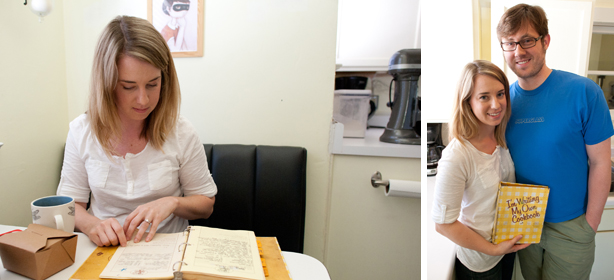
The history that Amanda outlined for me traces her mom’s side of the family. Her mother’s grandparents, both from Denmark, immigrated separately to America at the turn of the century. “My great-grandfather worked as a servant and then in the gold mines, finally making his way across America to San Francisco where he met my great-grandmother, another Danish immigrant working as a house maid. Together they had nine kids, including my grandma.”
Amanda flipped through a recipe binder, each plastic page protecting a hand-written recipe.
There are quite a few traditional Danish foods that have been passed down (almost all involving copious amounts of butter and cream) but the one that stands out the most is aebelskivers. Aebelskivers, round pancake like concoctions laced with cardamon, are the central dish at all of our family gatherings.
With her ingredients arranged on the counter, we she started cooking. Though aebelskivers start with common ingredients—flour, eggs, sugar, vanilla—the cardamom adds depth of flavor, and the whipped egg whites keep the batter light and fluffy.

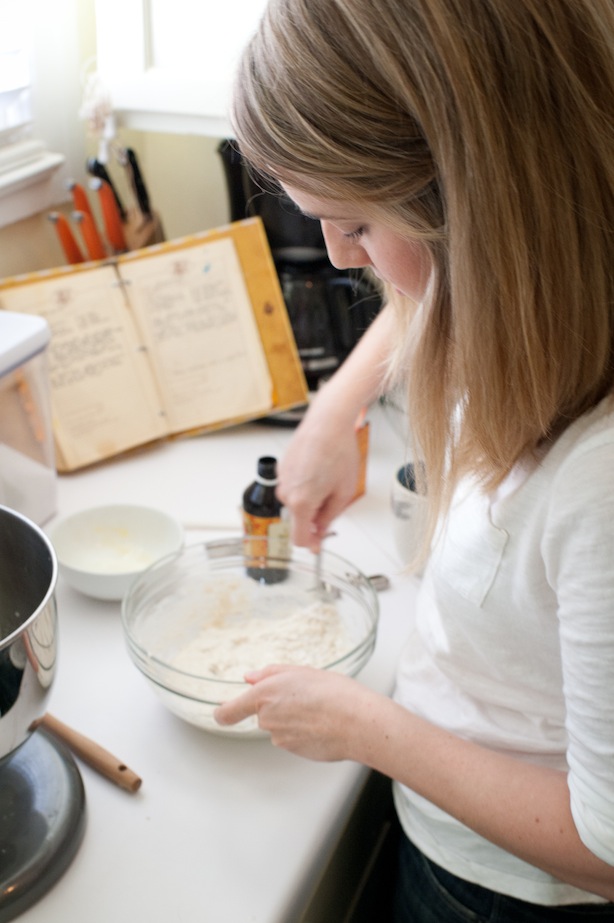
Growing up, my job was to mix the dry ingredients. Only the senior members of the family were allowed to actually cook the aebelskivers (it is quite a technique).
As the baby of the family, Amanda’s still not allowed to cook the aebelskivers at family gatherings. If her family’s reading this, I hope they’ll reconsider—she made it look easy!
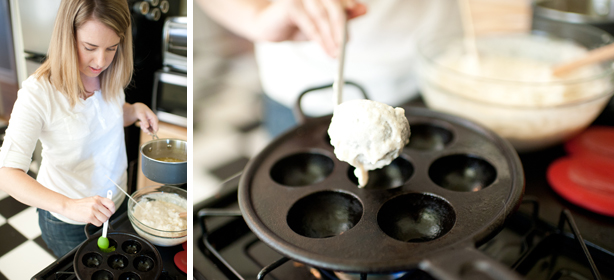
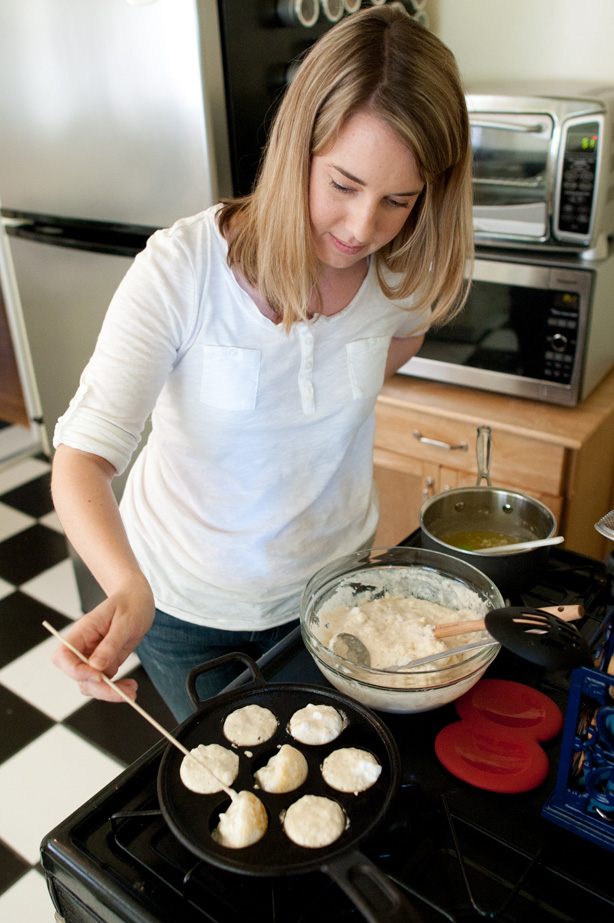

The family recipe book contains two recipes, side by side—one for aebelskivers (below), and one for ebelskivers. By trying both, “We’ve determined [the former] to be authentic.”
I asked how often she made these: “It’s something that’s always been for special occasions—we usually make them for Christmas and birthdays.” But Amanda believes that aebelskivers may have started as a traditional breakfast dish in Denmark. The flavor and texture work well for breakfast, though they’d work just as well for a light dessert.
One thing I learned about Amanda through our time together is that she’s a bit camera shy, though to be fair, I’m not sure I gave her fair warning about how close I like to get when I’m taking pictures. Still, she couldn’t hold back a smile as she cooked. Whether this was from fond memories of her grandmother, or from the satisfaction of not having to hand over the pan to an older sibling, I’ll never know.
Thanks for sharing, Amanda, and for agreeing to go first!
Aebelskivers

Ingredients
- 1 cup flour
- 1 1/4 cup buttermilk
- 2 egg yolks, beaten
- 1 tbsp. sugar
- 1/2 tsp. salt
- 1/2 tsp. baking soda
- 1/2 tsp. cardamom
- 1/2 tsp. vanilla
- 1 tbsp. melted butter
- 2 egg whites, whipped
Instructions
Blend dry ingredients. Add egg yolks and buttermilk, mix. Fold in vanilla, butter and egg.
Butter wells of heated pan before each aebelskiver is poured 2/3 full. Cook until bubbles formed; turn and cook until golden.
Note (at bottom of card): “temp between med and med low”
(Also, if you’re going to try these, you’ll need a specialty pan—they’re pretty easy to find, though.)
This is Amanda’s cat, Rufus—I couldn’t resist.










Recent Comments